
Agrostis stolonifera (tarack tipan)
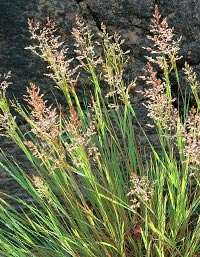
– Main features: a slow-growing species of grass with howitzers and stalks on the ground that are overwhelmed by nodes. The stem above the roots is purple, its short leaves are narrow and troughy. The leaf sheath is mostly closed, there are no ears, the tongue is long, thinning. It ripens very small seeds from its purple-green inflorescences. It often occurs in grasslands with good water supply, which are native to Hungary.
– Value in use: It is mainly used to make greens for golf courses, as its long-lived, fine textured, dense foliage can withstand trimming of less than 10 mm very well, even with a daily density. Its varieties, bred abroad, are less susceptible to diseases and are a component of seed mixtures produced for the planting of extra lawns. It is a water-intensive, slow-growing grass species that requires very careful care.
Agrostis canina (ebtippan)
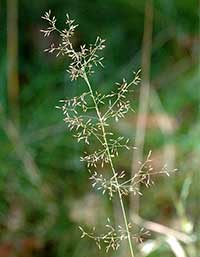
– Main features: a grass with creeping vines and howitzers, similar to howitzer tipan. Its leaves are thin, soft. Two-thirds of the leaf sheath is closed, there are no ears, the tongue is long, pointed. It forms a compact lawn in low calcareous production areas with good water supply.
– Value in use: its use in domestic grasslands is not typical due to its lime-avoiding nature. The breeds produced by foreign breeders are used on golf greens and contrasting surfaces, as they have the best textured foliage, relatively better drought and shade tolerance, and disease resistance. It forms a slow-growing, dense, dense lawn, and special attention should be paid to avoiding filleting among the care work, as in drier conditions the species is characterized by the accumulation of dead plant residues.
Agrostis capillaris (threadtippan)
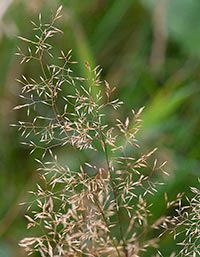
– Main features: grass with short vines and howitzers. Its leaves are thin, short, gradually thinning, the veins on the upper surface of the leaf plate make it gently ribbed. The leaf sheath is closed, the ear is missing, the tongue is 0.3-1mm long, thinning. It is not demanding on the soil, it tolerates drought well.
– Value in use: its slow-growing foliage with a fine texture forms a dense, long-lasting lawn. Regular short cuts on golf greens are well tolerated. Due to its adaptability to changing terroir conditions and relatively good drought tolerance, it is also used for the production of lawn and golf-type grass seed mixtures.
Festuca rubra var.rubra, commutata, trichophylla (red fescue)
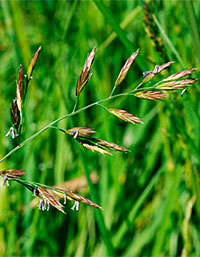
– Main features: roots with short howitzers (var.rubra and trichophylla) or bushes (var.commutata). Its narrow, stiff leaves are erect, bare or slightly haired (var.rubra). The above-ground part of the leaf stems is characteristically reddish in colour, while the tubularly closed leaf sheath is red in the lower parts. The earpiece protrudes on both sides of the leaf plate, is poorly developed, and the tongue is barely visible. Inflorescences also show a characteristic reddish discoloration. With the exception of strongly bound soils, it grows well everywhere, its drought tolerance is good.
– Value in use: After its initial slower development, its fine foliage produces a dense, thick lawn. All three variants have excellent shade tolerance, tolerance to extreme heat conditions in winter and summer, they can withstand short shear and are not susceptible to diseases. They are components of almost all types of grass seed mixtures. Among its variants, var.rubra has the best renewing ability, thanks to its strongest tendency to form howitzers. It is best adapted to the drought caused by summer heat, it is also used independently for planting lawns. The most resistant to winter frosts is var.commutata. The most tolerant variant of the increased salt concentration caused by the winter slip discharge is var.trichophylla, which is often used in grass seed mixtures that can be used along roads and promenades.
Festuca arundinacea
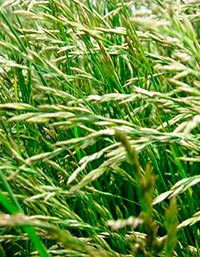
– Main features: root-like, deep-penetrating roots make it an extremely adaptable, bushy grass. Its broad, flat leaves are strongly veined, the lower part of the leaf sheath is reddish in color, the ears are sawed, haired, the tongue is short. It also develops well on sandy soils with poor nutrient content and poor water management.
– Value in use: its germination and hatching time are long, but after that it produces a dense lawn that grows intensively and has excellent tread tolerance. Thanks to its deep roots, it tolerates summer heat and drought well and retains the green colour of its leaves. Resistance to diseases is outstanding, well tolerates shady, weaker light conditions. It keeps its condition even with little care. Compared to other grass species, it should be trimmed less often, its optimal cutting height is 4-5 cm. It is also used independently for the establishment of grasslands, but due to its varieties it can be found in a seed mixture suitable for a wide variety of growing conditions and climatic conditions.
Festuca ovina
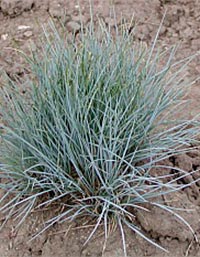
– Main features: a grass with deep roots that can be described as very drought-tolerant. In its bushy foliage, the juices are bare, needle-thin, stiffly upwards. The colour of the leaves of the basic species is greyish/blue-green, the tongue is very short, the ears are also poorly developed, rarely well recognizable. With the exception of damp, bound soils, it thrives in almost all places of production.
– Value in use: a component of grass seed mixtures for grassland plantations along less cared-for roads and other grassland plantations in public areas. Its newer varieties, with a green foliage colour similar to red fescue, shade tolerance and texture, make this species suitable for ornamental garden use. It can also be used on unirrigated stretches of golf courses.
Poa prarensis
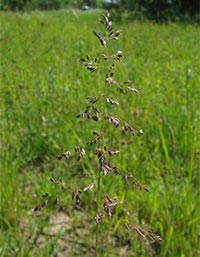
– Main features: one of the most valuable, native undergrass spreading with howitzers, with deep-penetrating root system, very good renewable ability. Its deep green leaves have a characteristic ribbing on both sides of the main vein. The tongues are short, the ears are barely developed, and only the stump is visible. It develops best on medium soil.
– Value in use: its development after sowing is protracted, but it grows a dense lawn when it is fully developed. Its adaptability, drought tolerance and tread tolerance are good, but it is difficult to tolerate shady conditions and short shearing, compacted soils. Its varieties, which are produced in large numbers, are a common component of a wide variety of grass seed mixtures. Through breeding, the breeds have improved disease resistance (e.g. rust), tread and short shear tolerance, faster initial development, and a more aesthetic appearance.
Lolium perenne
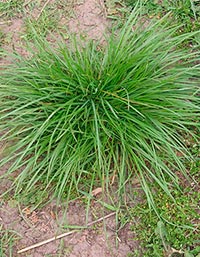
– Main features: bush-growing, well-growing, native grass species. Its thinning leaves, ending in a mountain, have a rough edge and a dark green colour. At a young age, a reddish top can be seen on the lower part of the leaf casing. The tongue is 1-2 mm, light green. The ears are well-developed, claw-pointed. It develops well on bound soils, and its adaptability is also good.
– Value in use: short germination, fast-settling but short-lived protective grass. Due to its highly renewable, fast-growing nature, its initial lawn-repellent capacity is good. Dryness and shade tolerance, resistance to diseases average, tread tolerance very good. Short cuts are hard to bear. The newer versions of the English ryegrass, which was previously used to create less demanding, fast-covering lawns, bear less and less the unfavourable characteristics of the basic species. Thus, it is already often used in the preparation of high-quality, mainly sports seed mixtures.