
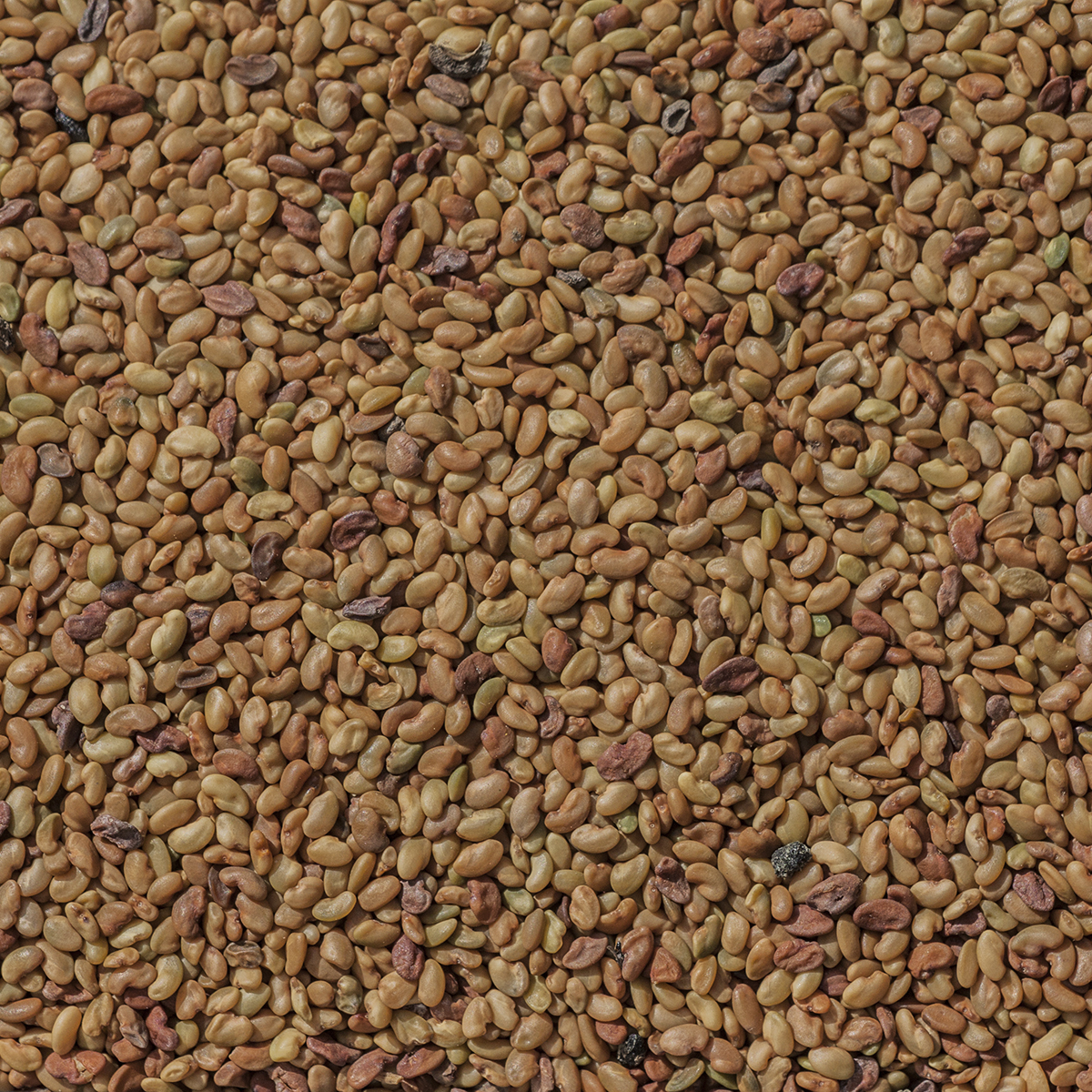



It has a high feed value, is rich in protein and can be fed in a variety of forms such as wrinkled, charcoaled, hay, pellets or flour. Amino acid composition is excellent. Extremely productive in intensive cultivation, but poor conditions, even in dry conditions, is one of the best solutions due to its deep root system, nitogen production, extreme drought tolerance and resulting outstanding crop stability. Do not plant on lime-deficient soils.
Well-associated with high-energy grass species:
in a dry location: knotted eagle, reed-faced fescue, Hungarian rye
in a fresh location, in more intensive production: English ryegrass, hybrid ryegrass, meadow fescue, meadow comosin
It is a very good precursor, it has an excellent effect on soil fertility, as it significantly enriches the soil with organic matter ( 8-12 t ha-1 per year) and nitrogen (min. 100 kg ha-1 per year).
In addition to the enriching effects of the described very good soil, it can also be used in greening, organic production and sustainable production systems for the following reasons:
- easy to grow without chemicals, easy to keep clean by mowing
- Weed suppression ability is good
- due to its branched root system, it has a beneficial effect on soil structure, humus content, water, air and nutrient management
- long, intense flowering, good bee pasture