
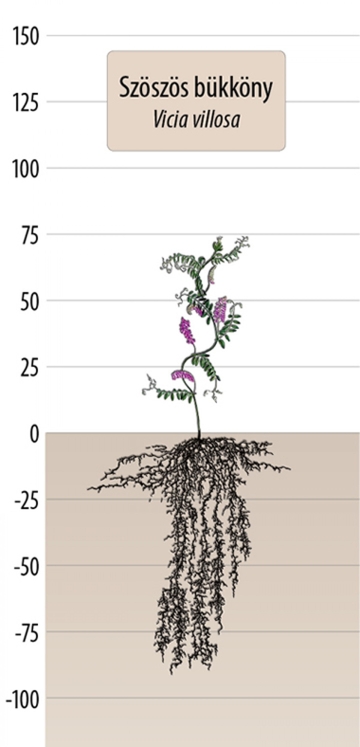

It is one of the dominant plants of autumn fodder mixtures. It is a dry-tolerant variety with a high protein content and a high green mass with good crop safety. It can be grown well with a support plant with ears even under weak conditions. Its main supporting plants are rye, winter wheat, and triticale. It has a very rich intensive stock, excellent protection against erosion, very good weed suppressant. It develops a deep-penetrating, rich root system, resistant to drought, good wintering. It can be grown successfully on sandy soils, as well as on bound clay soils. It is used very effectively in the utilization of unfavourable sandy soils when sown with rye. He is an important creator of the Landsberg mixture (35% Blonde vetch, 15% Purple here, 50% Italian ryegrass, 60 kg/ha ), which, in addition to providing an early, heavy, high-protein feed, is an excellent precursor thanks to its nitrogen bonding.
It is one of the dominant plants of autumn fodder mixtures. It is a dry-tolerant variety with a high protein content and a high green mass with good crop safety. It can be grown well with a support plant with ears even under weak conditions. Its main supporting plants are rye, winter wheat, and triticale. It has a very rich intensive stock, excellent protection against erosion, very good weed suppressant. It develops a deep-penetrating, rich root system, resistant to drought, good wintering.
It can be grown successfully on sandy soils, as well as on bound clay soils. It is used very effectively in the utilization of unfavourable sandy soils when sown with rye. He is an important creator of the Landsberg mixture (35% Blonde vetches, 15% purple testicle, 50% Italian ryegrass, 60 kg/ha ), which, in addition to providing an early, heavy, high-protein feed, is an excellent precursor thanks to its nitrogen bonding.
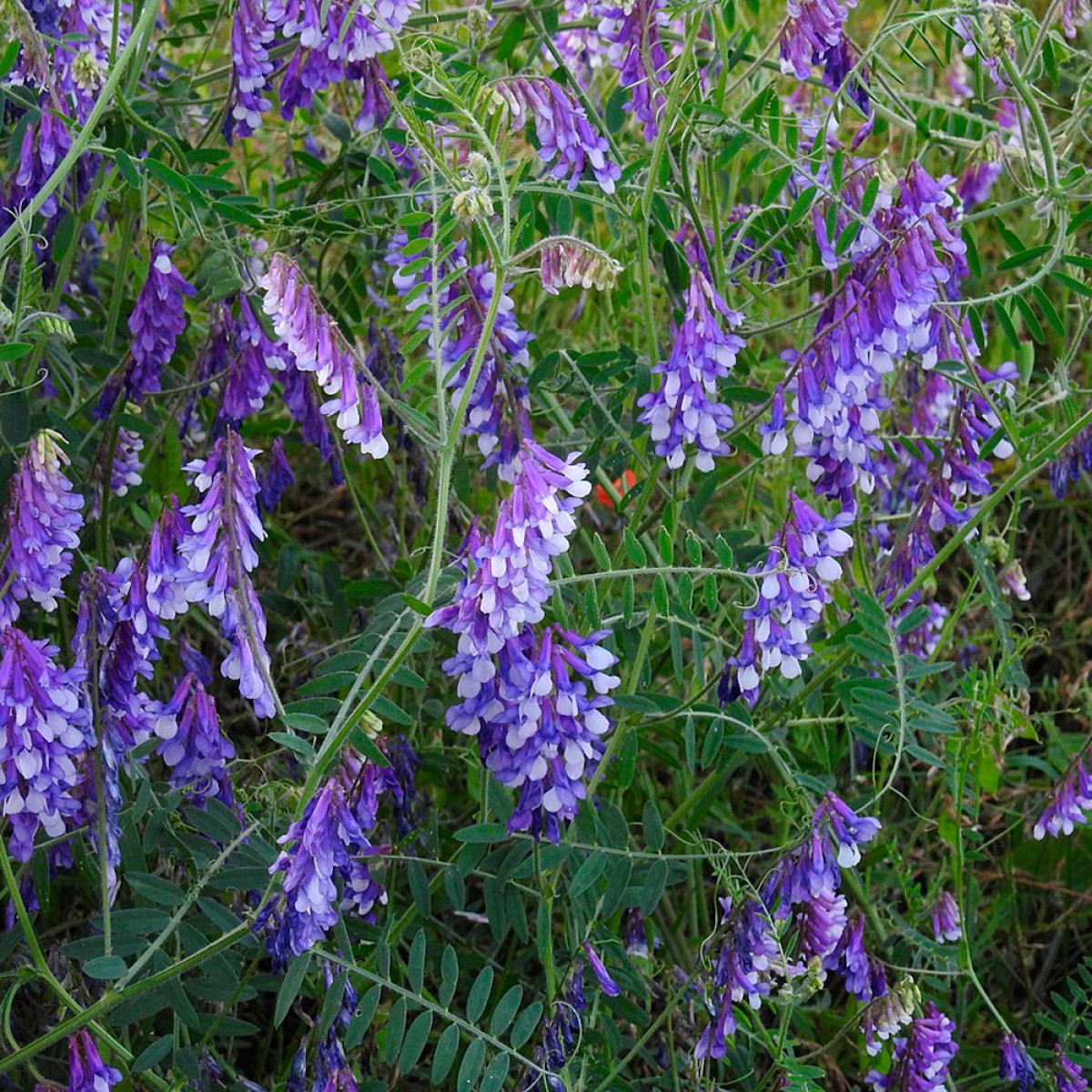
Photo: https://commons.wikimedia.org/wiki/File:Vicia_villosa_RF.jpg